
Bordering the Democratic Republic of Congo in the southwestern region and the Central African Republic in the western region, the Western Equatoria state is part of the founding states of South Sudan. As part of the Equatoria states, together with the Central and Eastern states, the Western Equatoria state is also known as the breadbasket region.
This is attributed to the state’s ability as an agricultural region. The Western Equatoria state is an agriculturally rich state with very fertile soils. On top of having fertile and quality soils for agriculture and crop production, this state receives a high quantity of rainfall that further strengthens its agricultural capacity.
The Western Equatoria state was one of the pioneers of the Equatoria states from the time of their formation. Following disagreements along ethnic lines, tensions arose that forced the original Equatoria Province to split into sections. These sections were the Eastern and Western Equatoria states.
At a time when the Republic of South Sudan gained sovereignty in 2011, the Western Equatoria state, together with the other Equatoria states, was made part of the newly formed country. However, the independence of South Sudan, it did not mean the end of the political instability in the country. This instability was basically directed at the ethnic tensions that arose around the political and resource inequalities.
By 2020, the South Sudan civil war came to an end following a unilateral ceasefire among all the army fronts. In a new wave of ideals of proper governance of the youngest country in the world, South Sudan, the government adopted and re-established the Equatoria states under its 10-state structure.
This was done to decentralize governance and the proper allocation of resources across the country. It has also developed democracy since people elect their administrative leaders, in this case, governors, in their respective states.
How far is the Western Equatoria state?
The distance of the Western Equatoria state is determined from the capital city of South Sudan, Juba. However, it also widely depends on where exactly one is traveling. All in all, the Western Equatoria state is estimated to be approximately 400 kilometers from the capital, Juba. This distance is equivalent to about 12 hours of driving time. This means traveling by road from Juba to this state is the longest option.
Another option is traveling by air. The Western Equatoria state is relatively developed and has an airfield in its capital city of Yumbi. This has very much eased travel between the capital and this state. This is because the long driving time of 12 hours is cut short to just about 1.5 hours of scheduled flight.
What are the cities to visit in the Western Equatoria state?
Western Equatoria state has a relatively developed city of Yumbi, and it is the major administrative center for the state. This is also the commercial and trading hub where lots of people come to trade. Yumbi City is supplemented by other big towns like Tambura and Maridi. The Western Equatoria is a rich state in agriculture; therefore, it receives a lot of people from across the country participating in trade.
What are the tours conducted in this Western Equatoria state?
Although the Western Equatoria state may not have a distinct destination for adventure, it has other exciting tours, as shown below.
Coffee tours
Western Equatoria state is the biggest agricultural state in the whole of the Equatoria states of South Sudan. Its agricultural potential can be felt through the coffee tours. The type of coffee grown in South Sudan is known as Excelsa coffee. This type of coffee is unique from most of the other types, like Arabica grown in the volcanic-rich soils.
The Excelsa coffee is a weather-resistant coffee type that lasts for a while without irritation. This is why it is perfect for this state of Western Equatoria. Visitors during the coffee tours in this state have a chance to explore the commercial product of this area and interact with the local farmers about the different methods of coffee production.
Cultural tours
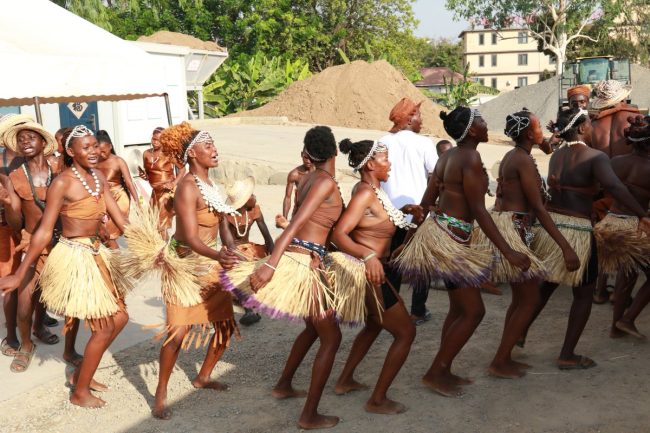
Cultural tours in the Western Equatoria state are very different from those in other states of South Sudan. As many hear or embark on cultural tours in other states of South Sudan, they may think it’s the same all around. But this may not be the case in this particular state since it hosts different tribes.
There could be similarities in a way, but much is different, including their norms, values, beliefs, and customs. Some of the tribes to visit on cultural tours in the Western Equatoria state include Avukaya, Baka, Mundu, Jur Modo, Moru, and Balanda, among others. Despite the allegations of tribal conflict in South Sudan, the tribes in the Western Equatoria state are very safe to visit and explore their diverse cultures.
Zande Kingdom
Adding to the culture tours, the Western Equatoria state is home to the Zande Kingdom. This kingdom is an ancient kingdom also known as the Azande Kingdom, spanning past the borders of South Sudan into the Democratic Republic of Congo and the Central African Republic. The agricultural ability of Western Equatoria state is thanks to the Azande people, who are renowned for their ironworks and agriculture.
This is why this kingdom resisted British colonial rule since it was independent, capable of food production, and iron-making. Unfortunately, this led to the fall of this kingdom in 1905 when it was invaded by the British forces. The kingdom was abolished for about 117 years, after which it was revived on the 9th of February 2022.
King Atoroba Peni Rikito Gbudwe was installed as king and is a great-great-grandson of King Gbudwe, who fought with the British. Visitors can explore this unique kingdom and learn their rich culture and history of resistance.