
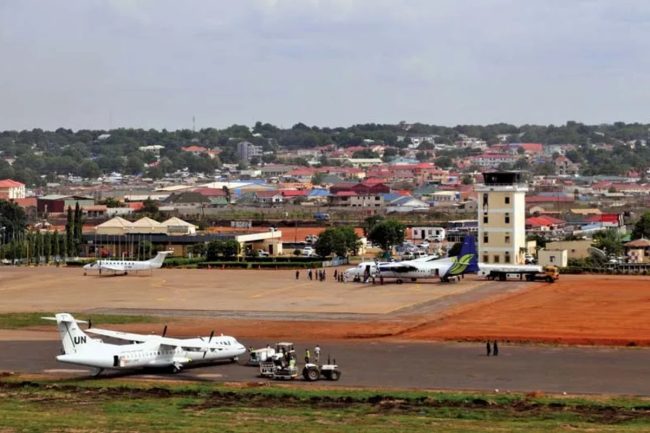
The Central Equatoria state is the commercial hub of South Sudan, located in the center of the country. South Sudan is the youngest country in Africa, having gained independence in 2011 after years of constant political unrest. Among the 10 states that make up South Sudan, Central Equatoria State is arguably the most populous and most developed.
This state has a diversity of cultural institutions, making it a cultural hotspot. The apex of this state is its ability as a commercial powerhouse for South Sudan. Before it became a state, Central Equatoria State was part of the Equatoria Province. In the 1980s, this province was further divided into Eastern Equatoria and Western Equatoria.
With political tensions on the verge of snapping between northern and southern Sudan before independence, the government of Khartoum created another state in the region of the current Central Equatoria. This further strained the region after the Bahr el Jebel state was formed. Bahr el Jebel is an Arabic name that means the River of the Mountains. This formed state was named after the White Nile, a tributary of the longest river in the world, the River Nile.
By 2005, when the power struggles of the North and South were at their peak, the Comprehensive Peace Agreement (CPA) was signed. This was during the first Interim Legislative Assembly, when the South Sudan authorities renamed this state Central Equatoria. The Central Equatoria state is not just a commercial hub but also an administrative state with its central administrative county as Juba, which happens to be the capital city of South Sudan.
The geographical location of the Central Equatoria state is worth mentioning because it signifies its positioning in global trade and security. The Central Equatoria is bordered by Uganda in the south and the Democratic Republic of Congo in the southwestern region. Internally, this state is bordered by Western Equatoria in the west, Eastern Equatoria in the east, and the Lakes state in the north.
Is the Central Equatoria state safe for visitors?
Yes, the Central Equatoria state is very safe and secure for visitors to explore its vast attractions. South Sudan has long been known for political instability, with years of civil wars that ruined its political standing on the world stage. Much as this may be true, South Sudan has, over the recent past, maintained peace and stability, and the economy is slowly growing. This stability gained in these few years has shifted the public’s perception of South Sudan from a dangerous country to visit to a special cultural hub secure for exploration.
What to see in the Central Equatoria state?
In the limelight of fame, the Central Equatoria state in the heart of South Sudan breeds a society of ancient cultural preservation and remarkable sights that could be uncovered. Below are some of the things to see in the Central Equatoria state.
Juba city
The vibrant Juba city is the capital of South Sudan and the major trading and commercial city of the Central Equatoria state. Juba City is a complex capital with a lot of people from different parts of the country and the world. With scarcity in essential goods and other commercial products for everyday use because of the prolonged political instability, several Africans came into the city to trade by bringing these goods into the country.
This revamped the city’s economic potential, and since then, Juba has been a secure place to explore. There are historical monuments and landmarks that visitors can add to their bucket list while in the city. Among these is the John Garang Mausoleum, which celebrates John Garang, who was killed in a plane crash. He was key in fighting for the independence of South Sudan. Another sight worth visiting in the city is Jubek’s grave in the Bari village; he was the chief of the Bari tribe, and Juba city is named after him.
Sudd wetland
The Sudd wetland is South Sudan’s national treasure, as it is the largest wetland or swamp in the world. South Sudan is known for having harsh arid climatic conditions, and hosting the largest wetland sounds like a contradiction, but it is not. The Sudd wetland is estimated to be 57,000 square kilometers of total tropical wetland.
It is responsible for contributing to the annual rainfall formation. The Sudd wetland was submitted to the UNESCO Tentative List and is pending designation as a World Heritage Site. This wetland holds a vast ecological system that hosts a variety of wildlife and bird species. This wetland is bordered by the Shambe National Park, which hosts lions, elephants, hippos, giraffes, Uganda kob, bushbuck, and olive baboons, among others.
Mundari cattle camps
The Central Equatoria state is home to the Mundari tribe. The Mundari people are famously known for cattle keeping and herding practises. This unique practise of herding by the Mundari people in their cattle camps is very interesting. Visitors can explore the Mundari cattle camps in the Central Equatoria state and witness the Mundari as they bond with the cattle. The Mundari people are nomadic pastoralists; thus, their whole life revolves around moving with their cattle to the grazing fields and watering holes. Visiting the Mundari cattle camps is like stepping into ancient Africa, untamed before civilization and modernity.
The River Nile
The Central Equatoria state is blessed to have part of the longest river in the world cross its borders. The River Nile crosses this state through its tributary, the White Nile, and is the major source of water. Visitors can embark on a boat cruise on the River Nile and have a once-in-a-lifetime moment of sailing on the giant Nile.
Where to stay in the Central Equatoria state?
Visitors have nothing to worry about in terms of accommodation, since this state has some of the best hotels in the country. The accommodation facilities are well categorized to serve all the visitors, from those seeking a luxury hotel and mid-range to those seeking budget accommodation. The hotels in the Central Equatoria state include some of the following;
- Radisson Blu Hotel: This hotel is situated in Juba City, the commercial and business hub of the Central Equatoria state. This hotel is an international premium 5-star hotel widely recognized across the world. This hotel offers luxury services, including amenities to make your stay a memorable one.
- Pyramid Continental Hotel: Located in Juba City, this is another luxury hotel offering privacy, safety, and comfort. It is a modern facility built with modern technology and with amenities like free internet, a park, laundry, and others. This hotel offers a seamless stay for visitors.
- Logali House: The Logali House is another accommodation facility in Central Equatoria offering mid-range services to visitors. It has budget-friendly costing with top-notch services and amenities that make you question its profit margin since the services offered surpass the costs. This is a good option for visitors looking for mid-range or budget accommodation.