
The southern regions of South Sudan, bordering the Eastern Equatoria state in the north, lie in the Jonglei state. Following the last concluded 2008 population census, statistics show that Jonglei state is among the most populous states in South Sudan. Although this census took place before South Sudan gained sovereignty in 2011.
With many people, there are always pockets of conflict. As a result, Jonglei state has unfortunately faced a protracted civil war over identity, in which tribes are prioritized over pastoralism. As this is the case in most counties of the Jonglei state, it is not the whole state. Therefore, Jonglei state has some very safe areas that can be visited from time to time.
The population gap Jonglei state has over some other states of the country is attributed to its vast size. Jonglei state covers a huge land area of approximately 122,581 square kilometers. The tribal conflicts in this state date back to the start of the 21st century, when pockets of small armed groups with tribal differences attacked each other and also the government forces. Such conflicts destabilized not just the Jonglei state but most of the states. However much Jonglei state has been affected by armed conflicts, its southern areas are safe and can be explored.
Jonglei state is geographically structured along the international border with Ethiopia in the east, with the local states of Central Equatoria and Eastern Equatoria in the southwest and south, respectively. Jonglei state’s north is the Upper Nile state; the northwest is Unity state, which stretches to the west too; and the Lakes state marks the southwestern side of Jonglei state. The White Nile, a tributary of the Great River Nile, crosses the Jonglei state. This crossing strategically situates Jonglei state in the Greater Upper Nile region. This region is crossed by the White Nile.
Before the continued civil war between different tribes in the northern region of Jonglei state, this state was vibrant and was economically independent, as it mined oil. This conflict was fuelled by conflicts over resources like food, water, land, and other personal reasons, such as grudges and cattle rustling.
Administratively, like the other states of South Sudan, Jonglei state is headed by a governor as the local administrative head, but under the general governance of the South Sudan government. This administration is decentralized to the county level, as each county has a head. Jonglei state has over 9 counties, and these include the following;
- Bor County
- Nyirol County
- Twic East County
- Akobo County
- Duk County
- Uror County
- Pigi County
- Ayod County
- Fangak County
Jonglei state has its commercial and capital, or headquarters, in Bor, and it is the central administration of this state. Bor is more developed than the other counties in Jonglei state and also doubles as the most populated county. This is due to its development with improved infrastructure like roads, schools, health centers, and other facilities like accommodation. The Jonglei state is surely a gem to explore for visitors interested in nature and culture.
Some of the interesting things and sights in the Jonglei state
For a while now, Jonglei state has been seen as a no-go zone following years of armed conflict that robbed this state of its natural beauty and a chance for exploration. However, all is not lost, as the southern region of Jonglei state is safe and recommended for travel and adventure for now, as the other regions walk through the same footpaths. Below are some of the interesting things and sightings in this state.
Bandingilo National Park
The vast Bandingilo National Park stretches through the three states of Central Equatoria, Eastern Equatoria, and Jonglei. This park is situated close to the White Nile, stretching approximately 10,000 square kilometers of savannah woodland and marshlands that enter Jonglei state. Bandingilo National Park was established in 1992 as a national park to protect the vast population of wildlife and birds.
Sudd wetland
The world’s largest wetland, the Sudd, also crosses into Jonglei state. This wetland is the world’s largest ecological system of its kind and hosts a vast population of wildlife species and birds. This wetland is approximately 57,000 square kilometers and can be explored on a boat cruise experience.
Local markets
The local markets in the different counties of the Jonglei state are also interesting to explore. This is a chance for the visitors to interact with the local people and also practise responsible and sustainable travel by supporting their businesses by buying a few souvenirs. The markets in the Bor County also attract people and goods from other regions and are a popular site for exploration, since it’s the commercial hub of this state.
Fish landing sites
Adding to the excitement and exploration of Jonglei state are the fish landing sites scattered across the White Nile and the Sudd wetland. These fish landing sites allow visitors to have a glimpse into the fishing industry of this state and interact with the local fishermen.
Dinka tribe
Visitors can explore the Dinka tribe through a cultural tour. Among the most popular tribes of South Sudan, specifically the Jonglei state, is the Dinka tribe. This tribe is categorically nomadic pastoralists, and their major economic activity is livestock rearing. Exploring the Dinka tribe is traveling back in time to the ancient early years of Africa before modernity. This is because this tribe to date practises their ancient customs, beliefs, and cattle herding practices.
Boat cruise on the Sudd wetland in Bor County
The biggest chance visitors have to explore the vast Sudd wetland is by boat cruise. This boat cruise adventure takes visitors on a memorable exploration journey where they spot a variety of wildlife species like crocodiles, hippos, and sitatunga antelopes, among others. Visitors can also spot birds like the cormorants, shoebill storks, darters, etc. This boat cruise costs about USD 350 per person.
Animal migration in the Jonglei landscapes
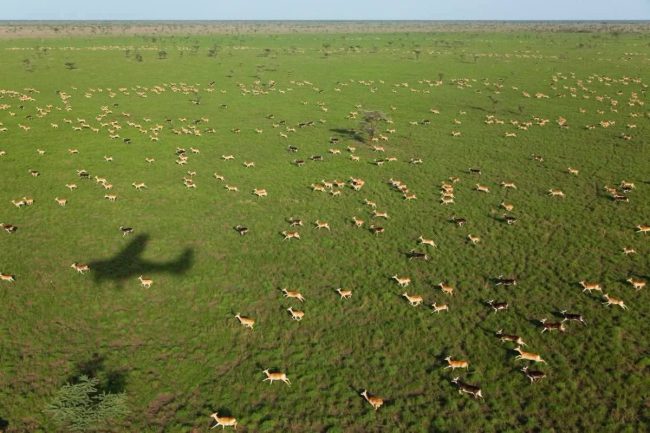
Perhaps the most rarely talked about natural phenomenon in the world, the greatest animal migration takes place here in the landscapes of Jonglei in Bandingilo National Park. This migration consists of over 6 million wildlife species, including white-eared kobs, mongalla gazelle, tiang, and Bohor reedbuck, among other species, as they search for water.
Accommodation in the Jonglei state
Most of the modest accommodation facilities are located in the city of Bor and consist of different options from luxury to mid-range and budget. The most viable options considered the best are Park Palace Hotel, Garden Resort Hotel, and Freedom Hotel.
In conclusion, the Jonglei state offers incredible sights that rank it among the best states to explore. Jonglei’s positioning in accessibility to Juba, the capital city of South Sudan, just 2-3 hours away by road, eases access. The tarmac main highway also adds to the smooth and quick drive. Contact us at Kinyeti Safaris for an amazing insight exploration into Jonglei State.